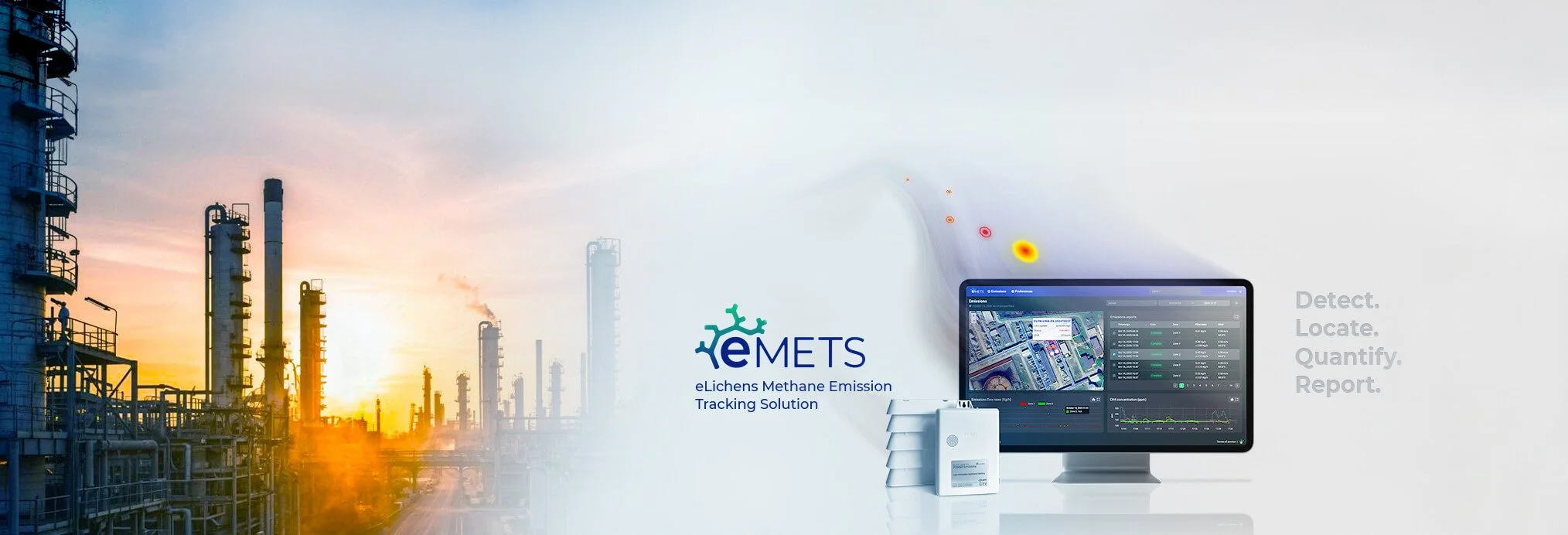
A Shift in Methane Detection for Oil and Gas and Safety Applications
Methane detection is a critical requirement across oil and gas operations, industrial safety systems, and emissions monitoring. From leak detection to regulatory compliance, the need for accurate, reliable, and continuous gas monitoring has never been higher.
Traditional sensing technologies such as catalytic bead, MOS, and electrochemical sensors struggle to meet modern requirements. NDIR, or Non Dispersive Infrared technology, is rapidly becoming the gold standard for methane detection and hydrocarbon sensing.
Understanding NDIR Gas Sensing
How does the NDIR principle work in gas sensors?
NDIR (Non-Dispersive Infrared) gas sensors detect gases by measuring how specific gas molecules absorb infrared light at characteristic wavelengths. In eLichens NDIR sensors, a proprietary IR microsource emits infrared light throughout the sensing cavity, where it interacts with the target gas. The infrared light then passes through dedicated optical filters before reaching the detectors. By measuring the amount of infrared light absorbed by the gas, the sensor determines its concentration.
dual-channel NDIR technology
How do NDIR and other gas sensor technologies compare?
| Parameter | NDIR (Infrared) | Catalytic (Pellistor) | Electrochemical | MOS (Semiconductor) |
|---|---|---|---|---|
| Measurement principle | Infrared absorption at CH₄-specific wavelength |
Oxidation of gas on heated bead | Redox reaction generating current |
Change in electrical resistance due to gas adsorption |
| Selectivity to methane (CH₄) | High ✓ | Low ✕ | Moderate ~ | Low ✕ |
| Accuracy & drift | High accuracy, very low drift ✓ | Moderate drift ~ | Significant drift ✕ | High drift ✕ |
| Operational lifetime | >10 years ✓ | 2–5 years ~ | 1–2 years ~ | <5 years ✕ |
| Calibration frequency | Low ✓ | Medium to high ✕ | High ✕ | High ✕ |
| Resistance to poisoning |
Immune ✓ | Highly sensitive ✕ | Moderate ~ | Sensitive ✕ |
| Oxygen dependency | Not required ✓ | Required ✕ | Not required ✓ | Not required ✓ |
| Measurement range | ppm to % volume ✓ | %LEL ~ | ppm ~ | Non-linear ✕ |
| Power consumption | Low (IoT-compatible) ✓ | Moderate to high ✕ | Low ✓ | Moderate ~ |
| Cross-sensitivity | Minimal ✓ | Moderate ~ | High ✕ | High ✕ |
| Total cost of ownership | Low ✓ | Moderate ~ | Moderate to high ✕ | Moderate ~ |
Why NDIR Is the Best Technology for Methane and Hydrocarbon Detection?
NDIR technology directly addresses the key challenges faced in gas detection, leak detection, and industrial safety.
High selectivity of the gas of interest:
NDIR sensors target specific absorption bands, ensuring precise detection even in complex gas mixtures.Long term stability for industrial applications:
With no chemical reactions, NDIR sensors offer minimal drift, making them ideal for continuous methane monitoring and emission tracking.Low maintenance and long lifespan:
NDIR sensors can operate for years without recalibration, reducing operational costs in oil and gas infrastructure and safety systems.Low power for IoT and portable gas detectors:
Modern NDIR designs enable battery powered gas detection, essential for remote monitoring, wearable safety devices, and wireless sensor networks.Versatility across applications:
NDIR can detect methane, propane, butane, CO2, and other hydrocarbons, making it suitable for leak detection, emissions monitoring, and environmental sensing.
How does eLichens advance NDIR gas sensor technology?
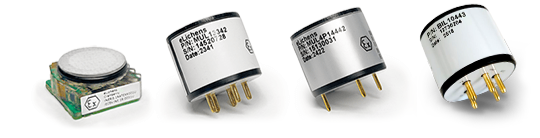
eLichens has more than 10 years of experience developing and advancing NDIR (Non-Dispersive Infrared) gas sensor technology for real-world gas detection and monitoring. eLichens NDIR sensors are integrated by OEMs into worker safety gas detectors, methane emission monitoring devices, residential methane detectors (RMDs), and indoor and outdoor air quality monitors.
This experience covers the entire path from NDIR sensor development to integration into finished gas detection and monitoring devices, with a focus on sensitivity, reliability, miniaturization, and low power consumption.
What are the key features of eLichens NDIR gas sensors?
A proprietary infrared microsource developed in-house, giving eLichens end-to-end oversight of the core NDIR technology and enabling seamless integration throughout the entire production chain, from a compact gas sensor to a complete monitoring system.
Patented long optical paths integrated into miniaturized cavities, enabling high sensitivity in compact formfactors sensors, for easy integration.
Ready-to-use digital output: provide direct access to reliable gas concentration data and simplifying sensor integration into connected devices and systems.
Extensive validation, including thermal shock, humidity testing and more to ensure reliable measurements in harsh environments.
Designed for seamless integration into any device, including methane detectors, emission monitoring systems, and HVAC equipment.
Continuous improvements through years of R&D, from early prototypes to today’s best in class sensors.
All Certified for ATEX, IECEx, and HazLoc, intrinsically safe for explosive atmospheres.
The result is high accuracy methane detection of 50 ppm up to 100 percent volume and ultra low power consumption, down to 75 µW, enabling continuous monitoring in battery powered systems.
Core Technology and Key Features
Other key advantages include:







Our sensors can be calibrated to detect CH4, C3H8, C4H10, CO2, R32, and all hydrocarbons, enabling a wide range of industrial applications.
OUR RANGE OF NDIR GAS SENSORS
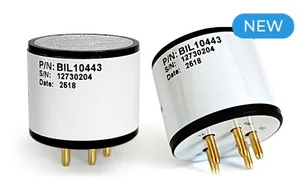
Bilberry is our most advanced NDIR methane sensor, designed for emissions monitoring and compliance or gas safety applications with methane leak detection especially in battery powered and IoT deployments.
Learn More →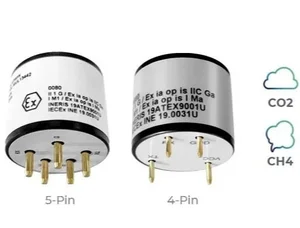
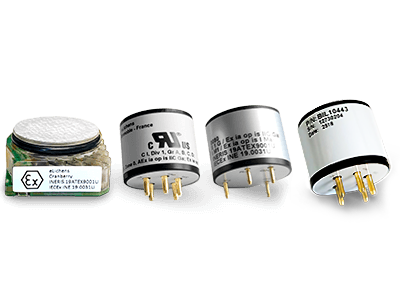
Mulberry sensors are widely used today in portable gas detectors and industrial safety devices. They are a proven solution for methane detection in field operations and worker safety applications. Exist in 4 & 5 pin 4-series formfactor designs, calibrated to methane, CO2, hydrocarbons or dual-gas Methane + CO2.
Learn More →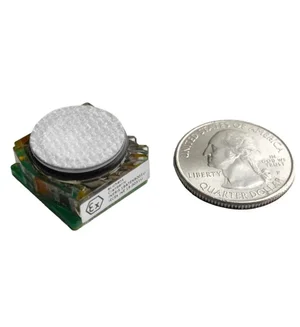
Cranberry sensors are designed for extrem compact and embedded gas detection systems as the world's smallest NDIR methane/CO2 sensor in a 1-Series formfactor. They are ideal for portable safety devices, IoT sensors, and space constrained applications.
Learn More →Contact us
Our team is ready to help you choose the best methane monitoring solution for your needs.
Learn More About eLichens Gas Sensors
Discover our full range of NDIR gas sensors for methane detection and industrial applications