Residential Methane Detection: Reducing False Positives
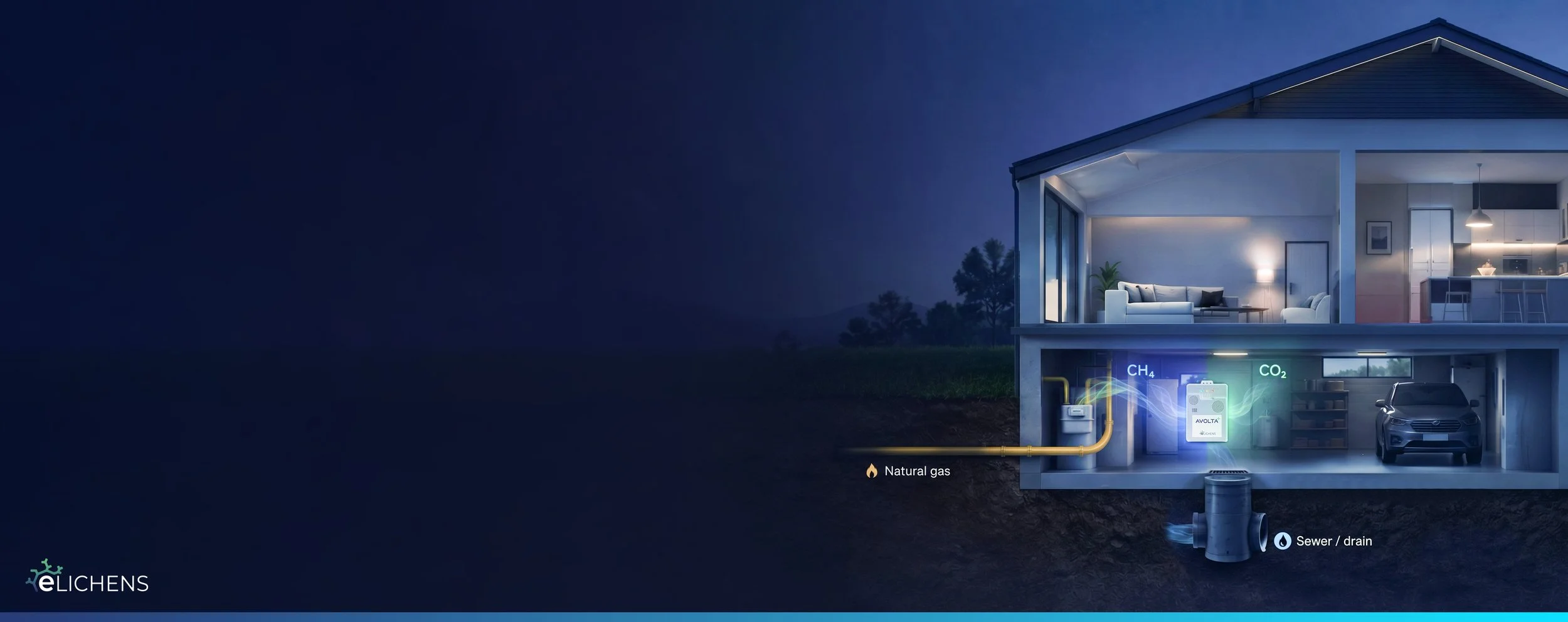
Residential methane detectors play a critical role in natural gas safety, providing an early warning when methane is detected inside the home. But methane detected in a basement, garage, or near a floor drain does not always come from a natural gas source.
Sewer systems, drainage pathways, flooding, and biological activity can also contribute to methane presence indoors. This creates a challenge for residential methane detection: identifying methane is essential, but understanding its potential source can provide valuable additional context.
A dual-sensor approach
Dual device with dedicated CH4 alarm sensing with non-alarming CO2 source context
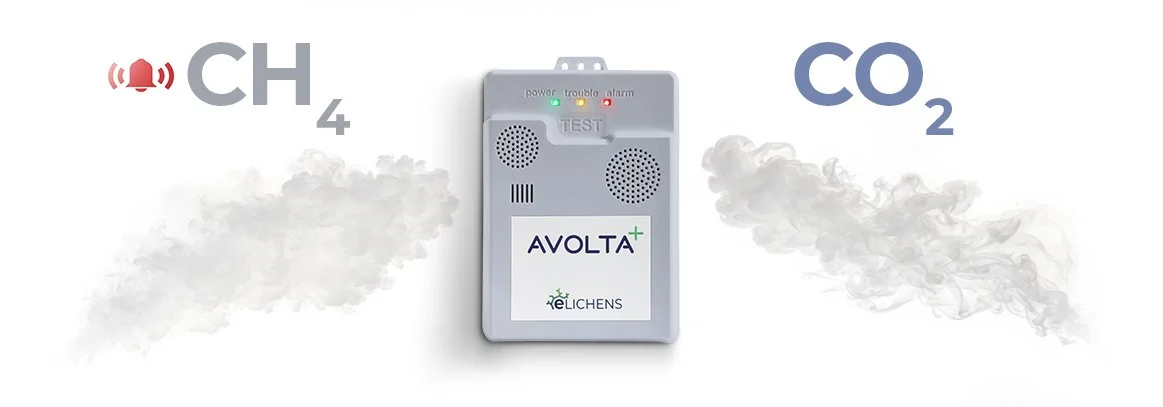
The eLichens Avolta+ architecture addresses this challenge by combining two physically distinct NDIR gas sensors:
A dedicated CH₄ sensor for methane detection and alarm triggering
A separate CO₂ sensor providing non-alarming source context
Only the methane sensor can trigger an alarm. CO₂ does not independently generate an alarm or interfere with the methane safety response. Instead, CO₂ measurements can help provide additional context when distinguishing potential natural gas events from sewer or biological sources.
Improving context around methane events
By analyzing CH₄ and CO₂ measurements together, along with environmental conditions, the approach can support more informed event classification.
This could help distinguish between likely natural gas events, sewer or biological sources, and indeterminate events, while maintaining a clear methane-first safety architecture.
The whitepaper also explores how this approach could help address methane false positives in residential environments, particularly during heavy rain and flooding, and outlines a validation program for real-world residential conditions.
Read the whitepaper
“Avolta+ RMD - Reducing False Positives Due to Sewer Emanations” presents the technical approach behind Avolta+, including dual NDIR sensing, methane-only alarm logic, source context, and the proposed validation methodology.
Read the full whitepaper to learn more about the approach to smarter residential methane detection and gas safety.

For Further Information
For in-depth insights into the study's findings, the comprehensive range of eLichens' detectors, and how these advancements can revolutionize methane emission monitoring in your specific industry, connect with eLichens at info@elichens.com.